
employee wellbeing trends
In this blog, we’ll explore five practical ways employers can reduce the health risks associated with sedentary work:
- Reintroducing movement into remote and hybrid working
- Designing meetings around movement
- Encouraging senior leaders to normalise movement
- Building movement into everyday working habits
- Keeping the momentum going with long-term behaviour change
With sedentary work increasingly driving up physical and mental health risks, employers need to rethink how movement fits into the working day.
Over the past few years, the working day has quietly changed. More time at desks. More back-to-back virtual meetings. Fewer natural opportunities to move.
The impact is starting to show with prolonged sitting linked not only to weakened muscles, poor circulation, heart disease, diabetes and stroke, but also increased depression and anxiety. So much so that prolonged sitting is now considered a health risk in its own right.
Traditionally, occupational health has focused on helping people recover from illness and avoid injury. But as work becomes more sedentary, attention is increasingly shifting towards prevention, including how movement can be built back into the working day.
Walking represents one of the simplest and most accessible ways to reduce sedentary health risks. So with that in mind, we’re sharing five ways to make walking part of your wellbeing strategy.
Five ways to make walking part of your wellbeing strategy
1. Reintroduce movement into remote and hybrid working
Remote and hybrid working have removed many of the natural opportunities employees once had to move. What used to be a daily walk to the station or office has, for many, been replaced by a few steps to a desk.
As work becomes more sedentary, employers must think about how movement can be designed back into remote working routines. Encouraging homeworkers to recreate a short ‘commute’ by going for a walk before work can be a simple but effective way to reintroduce movement into the day.
Research from the University of Cambridge indicates that just 11 minutes of daily brisk walking is enough to significantly reduce health risks to increase life expectancy. Helping employees to achieve this, with ‘movement breaks’ between tasks can also support energy levels, concentration and overall wellbeing, while also reducing health risks.
2. Design meetings around movement where possible
Back-to-back video meetings are now a routine part of working life, often leaving employees sitting for hours, without meaningful movement breaks, contributing to one of the fastest-growing occupational health risks.
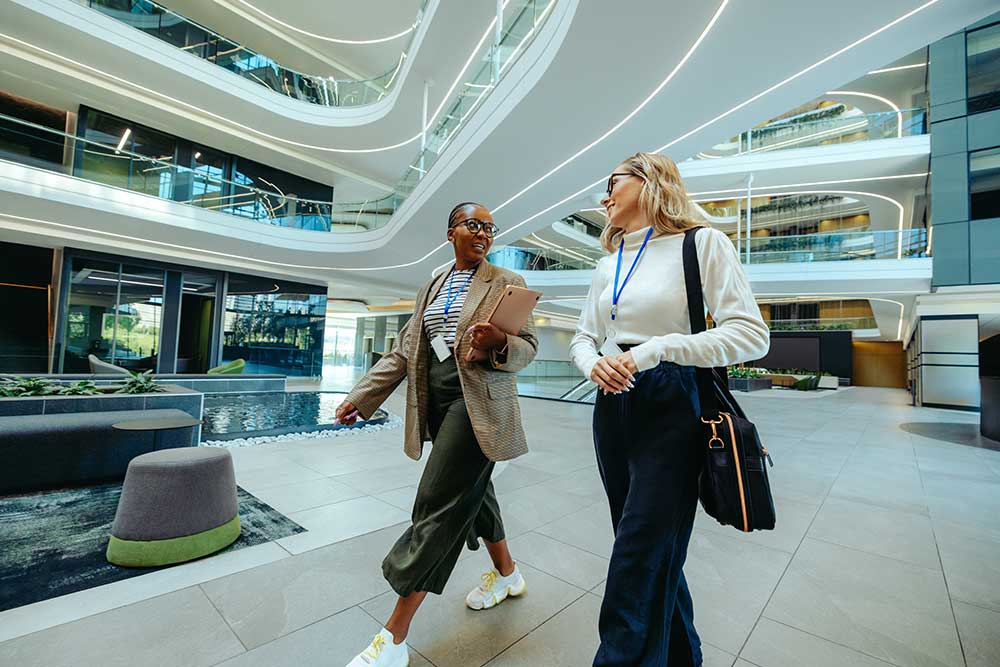
Meetings that don’t require screen sharing, or multiple participants can instead be carried out by walking in person or talking over the phone. These ‘movement meetings’ not only reduce sedentary time, but also support creativity, focus and wellbeing.
Where screen-based meetings are unavoidable, consider how best to use workstation design, movement breaks and sit-stand desks to help reduce the ergonomic risks associated with sitting for too long.
3. Use leadership behaviours to normalise movement to help reduce sedentary work
Even though one in ten employees now want the opportunity to exercise during the working day, according to our latest Health at Work report, many feel reluctant to do so if this isn’t already part of the culture of the company.
Employees are far more likely to prioritise movement if they see senior leaders and managers supporting and modelling this behaviour themselves. This could include employee groups taking a collective walk over lunch, or to re-energise during the mid-afternoon slump.
Simple changes, such as avoiding scheduling meetings over lunch, taking walking meetings around the local park or encouraging movement breaks between tasks can create a culture where movement feels accepted, rather than disruptive.
4. Build movement into everyday working habits
One of the biggest barriers employees report when it comes to moving more during the working day is lack of time. That’s why incorporating movement into existing routines is one of the simplest and most effective approaches.
Encourage employees to take the stairs, park slightly further away from the office, or shops, walk during breaks or before or after work.
Team step challenges and shared goals can also help build positive peer pressure, culture change and long-term engagement, turning movement from an individual activity into part of your workplace culture.
5. Keep the momentum going to help reduce sedentary work long-term
Reducing sedentary risk isn’t about encouraging short bursts of activity. It is about creating healthier and more sustainable ways of working overtime. As employees begin to build fitness through walking, encourage them to set realistic goals, such as walking further or faster or introducing a secondary activity such as cycling, jogging, a sport or yoga.
Employers can support this by continuing to look at how work itself supports physical and mental wellbeing, from meeting culture and workstation design through to leadership behaviours and flexibility.
Final thought
From an occupational health perspective, prevention increasingly means identifying the risks created by modern ways of working before they contribute to longer-term health issues. Building more movement into the working day can support healthier employees, reduce absence risk and create more sustainable ways of working over the long-term.
This blog was originally published May 2026 and was written by PAM Group, part of Optima Health. The author is Janet O’Neill, Head of PAM Academy and Occupational Health Leader.
Optima Health provide a range of occupational health and mental health interventions to help support employee wellbeing and reduce sickness absence. Contact us today to find out how Optima Health can support your health and wellbeing initiatives.